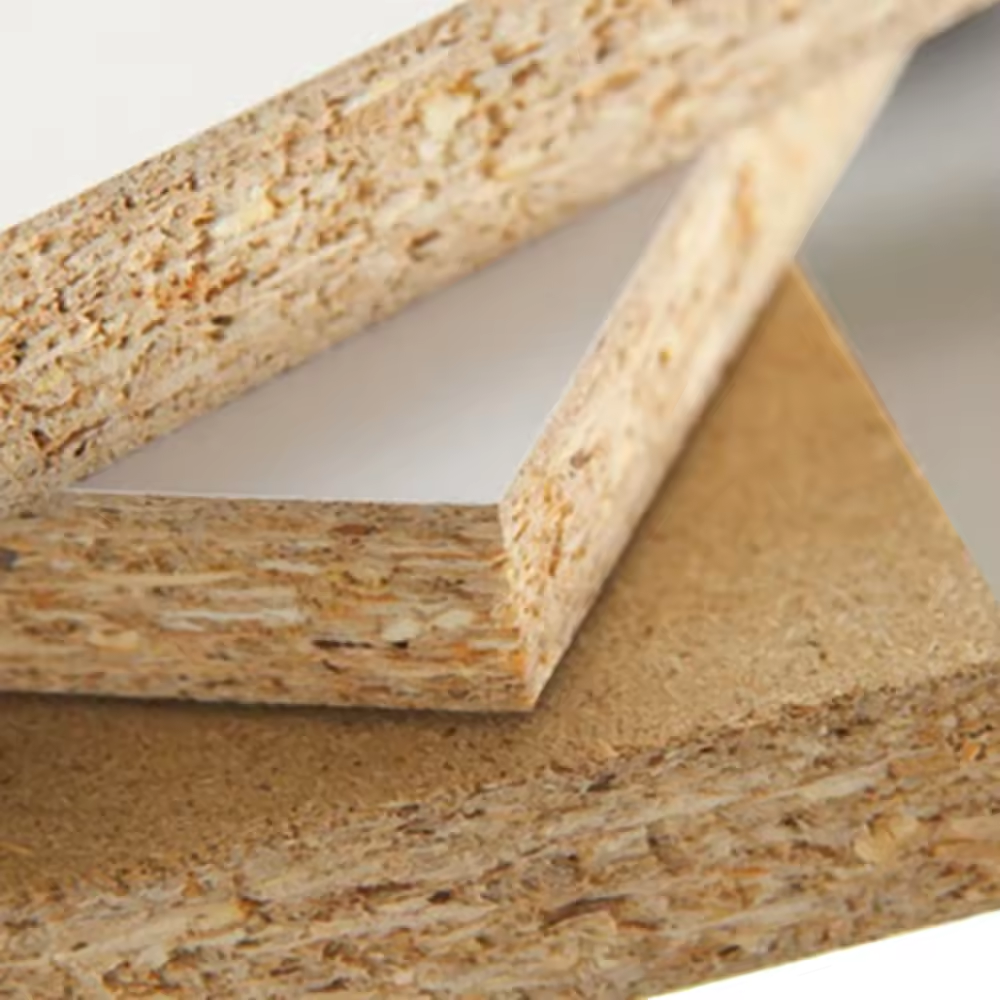
Classification and characteristics of furniture particleboard
Furniture particleboard (also known as chipboard) is a type of engineered wood product made from wood chips or plant fibers that have been dried, glued (such as with urea-formaldehyde resin or MDI glue), and hot-pressed. It is commonly used for structural components such as the boxes and cabinets of panel furniture.

Classification and characteristics of furniture particleboard:
Furniture particleboard can be categorized by core characteristics such as density, structure, water resistance, surface condition, and application. Common types include ordinary particleboard, moisture-resistant particleboard, and oriented strand board (OSB, although a branch of particleboard, it has superior performance). Its characteristics include a smooth surface and ease of processing with veneers.
1. By density: Low density (0.25–0.45 g/cm³), medium density (0.45–0.60 g/cm³), high density (0.60–1.3 g/cm³); furniture often uses medium- to high-density boards with a density of 0.60–0.70 g/cm³.
2. By structure: Single-layer, three-layer (fine surface, coarse core), gradient structure (density gradually changes from surface to core), oriented strand board (OSB, longitudinally laid particleboard, higher strength); ordinary furniture mostly uses randomly arranged single-layer or three-layer boards.
3. By water resistance: Divided into ordinary type (for indoor dryness) and moisture-resistant particleboard (with added moisture-resistant agent, 24-hour water absorption expansion rate ≤14%), the latter can be used for kitchen and bathroom cabinets.

4. By surface: Unfinished (requires veneer/paint) and finished type (such as melamine particle board, PVC film, directly used for cabinets/door panels); furniture mostly uses the latter.
5. By environmental protection level: Depends on the adhesive—urea-formaldehyde resin, MDI/formaldehyde-free resin, etc. Common grades include E0 E1 E2 grade particleboard, etc. When purchasing, look for the corresponding standard and environmental protection label.
Features: Furniture particleboard is flat and easy to laminate, low in cost, has decent static bending strength, and good sound absorption and heat insulation; however, it is prone to chipping at the edges, requires strict edge sealing for moisture prevention, has weaker nail-holding power than solid wood or plywood boards, is prone to loosening after repeated disassembly and assembly, and inferior products have a high risk of formaldehyde release.

Applications of Particleboard for Furniture:
Particleboard for furniture is mainly used as the base material for cabinets, doors, shelves, back panels, and countertops in panel furniture. It is commonly found in custom cabinets, wardrobes, bookcases, office furniture, and simple bed frames.
1. Kitchen Furniture: Furniture particleboard is commonly used for cabinet bodies (especially moisture-resistant particleboard), and countertop base layers (requires quartz/artificial stone), but requires good edge sealing for moisture prevention.
2. Bedroom Furniture: Wardrobe side panels, back panels, shelves, drawer bottoms; bed frame headboards (non-load-bearing structure).
3. Living Room and Office Furniture: Standard panel components such as TV cabinets, bookcases, coffee tables, filing cabinets, and office partitions.
4. Customized furniture: Due to its ease of machining and the ability to be finished with melamine (i.e., “double-sided melamine panels”), it is suitable for large-scale standardized production.
5. Lightweight furniture and packaging: Such as folding furniture, shipping box linings, display racks, etc. (requires low-density or homogeneous materials).
Tips for Choosing Furniture Particleboard:
When choosing furniture particleboard, the key factors to consider are its environmental protection rating, density, edge banding process, and moisture resistance.
1. Look for environmental standards: The formaldehyde emission of the furniture particleboard should meet ENF level (≤0.05mg/m³) or E0 level. Request a test report and avoid boards with a pungent odor (which may indicate excessive formaldehyde).
2. Density determines strength: The density of the furniture base material should be ≥650kg/m³ (high density). Low density boards are prone to deformation and have poor nail-holding power. High-density particleboard is used for ordinary cabinet bodies, but load-bearing parts (such as bookshelves and countertops) must meet the standards.
3. Edge banding is crucial: The edge banding of furniture particleboard must be flat, free of bubbles and cracks (PVC or ABS hot-melt edge banding is superior to wood strips). Inferior edge banding leads to moisture absorption and expansion, increasing formaldehyde release. You can judge quality by touching the edges and listening for hollow sounds when tapping.
4. Choose the type according to the scenario: Ordinary high-density particleboard can be used in dry areas (bedroom wardrobes, bookshelves); “moisture-resistant particleboard” (with added moisture-proof agent, but not waterproof, still susceptible to damage from prolonged dampness) is required in kitchens and bathrooms; avoid use in areas frequently exposed to water.
5. Check the appearance and structure: The surface of the furniture particleboard should be flat without dents, bubbles, or defects; the cross-section should have uniform particles, no debris or impurities, and a faint wood smell rather than a pungent glue odor; avoid the low-price trap of “using only particleboard as the inner lining and applying wood grain paper to imitate solid wood.”